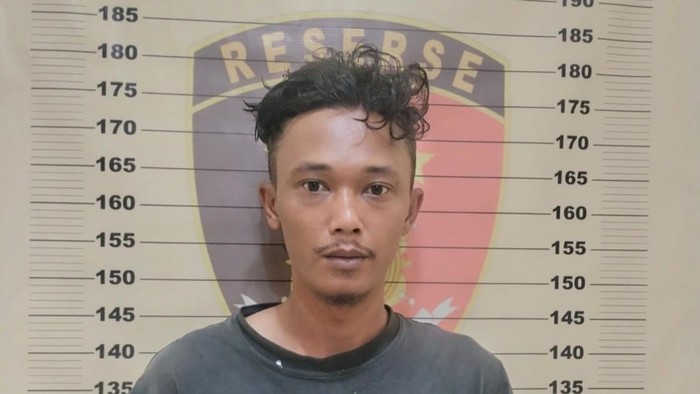
Jakarta – Subdit Jatanras Ditreskrimum Polda Metro Jaya menangkap dua pelaku pencurian motor (curanmor) yang menembak ojek di Matraman, Jakarta Timur. Kedua pelaku, ENR (23) dan RDS( 21), ditangkap di tempat persembunyiannya di kawasan Lampung Timur.
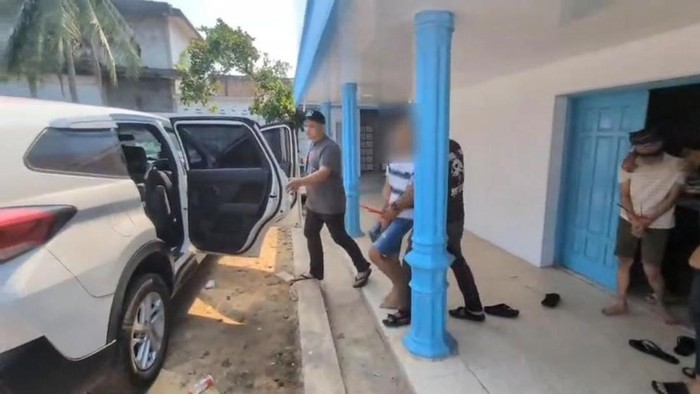
Dalam rekaman video yang diperoleh tim Subdit Jatanras Ditreskrimum Polda Metro Jaya tengah melakukan pengejaran terhadap kedua pelaku. Tim kemudian tiba di rumah tempat persembunyian kedua pelaku.
Saat petugas tiba, tidak ada yang membukakan pintu. Hingga akhirnya petugas terpaksa mendobrak pintu.
Kemudian petugas langsung masuk ke dalam rumah. Di dalam rumah, petugas sempat mencari-cari keberadaan pelaku. Beberapa petugas kepolisian terlihat turut membawa senjata api laras panjang.
Tak lama setelah mencari, akhirnya petugas berhasil menemukan kedua pelaku. Keduanya pun langsung dibawa ke dalam mobil.
Diketahui, Polda Metro Jaya berhasil menangkap dua maling sepeda motor yang menembak pengemudi ojek di Matraman, Jakarta Timur (Jaktim). Keduanya ditangkap di wilayah Lampung Timur.
Dirkrimum Polda Metro Jaya Kombes Iman Imanuddin menjelaskan, kedua pelaku ditangkap oleh tim Subdit Jatanras Ditreskrimum Polda Metro Jaya. Kedua pelaku ditangkap kemarin, Jumat (24/7) sekitar pukul 10.00 WIB.
“Tim berhasil mengamankan dua orang pelaku di wilayah Lampung Timur,” jelas Kombes Iman kepada wartawan, Sabtu (25/7).
Iman menjelaskan, kedua pelaku yakni ENR (23) dan RDS (21) berbagi peran dalam menjalankan aksinya. ENR bertindak sebagai eksekutor sekaligus yang menembak pengemudi ojek, sedangkan RDS merupakan pengendara.
“Salah satu pelaku merupakan eksekutor yang melakukan penembakan terhadap korban, sementara pelaku lainnya berperan sebagai pengendara,” kata Iman.
Dari penangkapan keduanya, polisi turut menyita barang bukti senjata api yang diduga digunakan untuk menembak pengemudi ojek. Senjata api diduga rakitan itu disita masih lengkap dengan satu butir peluru kaliber 9 milimeter.
“Petugas menyita satu pucuk senjata api rakitan jenis revolver berwarna perak dan satu butir peluru kaliber 9 milimeter,” terang Iman.
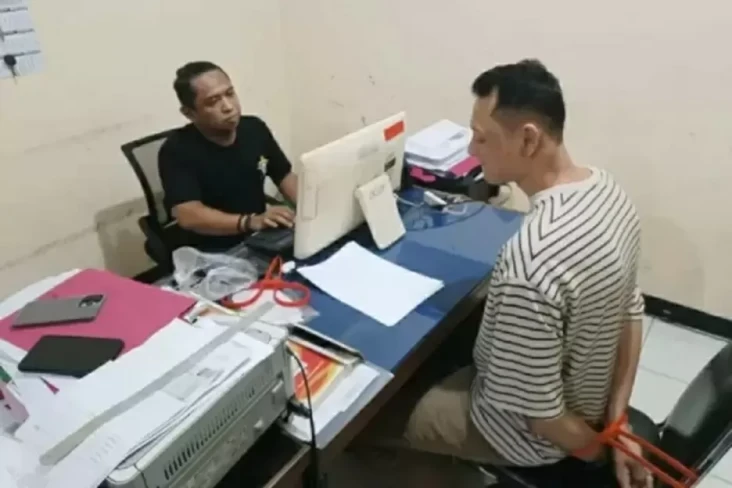
Kedua pelaku kini masih menjalani pemeriksaan. Polisi turut mendalami asal-usul senjata api tersebut serta kemungkinan keterlibatan mereka dalam tindak pidana lainnya.
Kedua pelaku dijerat Pasal 479 juncto Pasal 17 KUHP tentang percobaan tindak pidana pencurian dengan kekerasan.
Kronologi Penembakan Ojek
Peristiwa pencuri sepeda motor berujung penembakan terhadap ojek tersebut terjadi di Jalan Salemba Utan Barat, Palmeriam, Matraman, Jakarta Timur, Sabtu (18/7) sekitar pukul 12.22 WIB. Mulanya, pemilik motor saat itu mendengar suara langkah kaki dan melihat dua orang berusaha mengambil sepeda motor miliknya.
“Selanjutnya, saksi mengetuk pintu dari dalam hingga kedua pelaku melarikan diri. Ketika hendak mengejar, saksi melihat salah satu pelaku mengeluarkan senjata api sehingga memilih mengurungkan niatnya dan berteriak meminta pertolongan,” jelas Iman.
Mendengar teriakan ‘maling’ dari pemilik motor, pengemudi ojek yang menjadi korban penembakan, mencoba untuk memberikan bantuan. Pengemudi ojek tersebut berupaya menghadang kedua pelaku.
“Salah satu pelaku kemudian melepaskan tembakan yang mengenai paha kanan korban. Setelah itu, kedua pelaku melarikan diri dari lokasi kejadian,” tutur Iman.